Rising Dissolution
Rising Dissolution, 2019
Exhibition, Factatory, Lyon
Photos: © Lucas Zambon
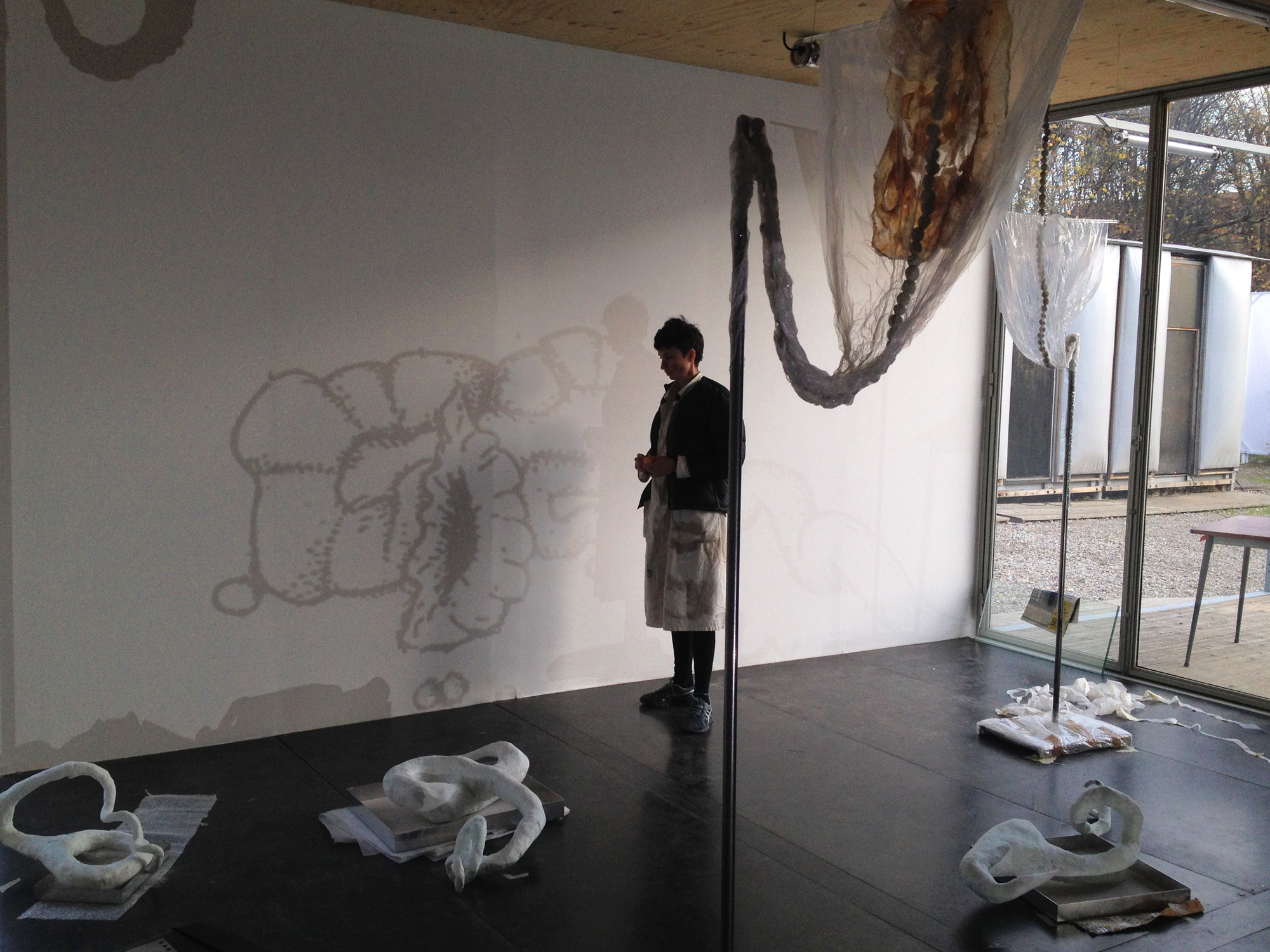
Rising Dissolution presents a series of liminal bodies—part human, part marine species—that evoke the uncertain fate of oviparous marine species*. The installation is informed by the consequences of climate breakdown, particularly rising beach temperatures, which cause the breeding sands of female sea turtles to become warmer. This change has led to mutations and sex changes in their embryos.
The artworks quietly reflect on these mutations through a combination of hybrid materials and form. Tall steel sculptures, which stand like marine sentinels, are composed of strings of organic eggs and enveloped in found plastic and synthetic fabric. On the ground, plaster and clay tentacular floor sculptures emerge from sand-filled aluminium plinths. The wall paintings reference the reproductive organs of sea turtles, specifically the oviduct, a tube-like structure that connects the ovaries to the exterior world.
Half-submerged and half-emerged, together they create a rhythmic choreography that suggests both growth and dissolution, as if caught in the suspended animation of an evolutionary shift.
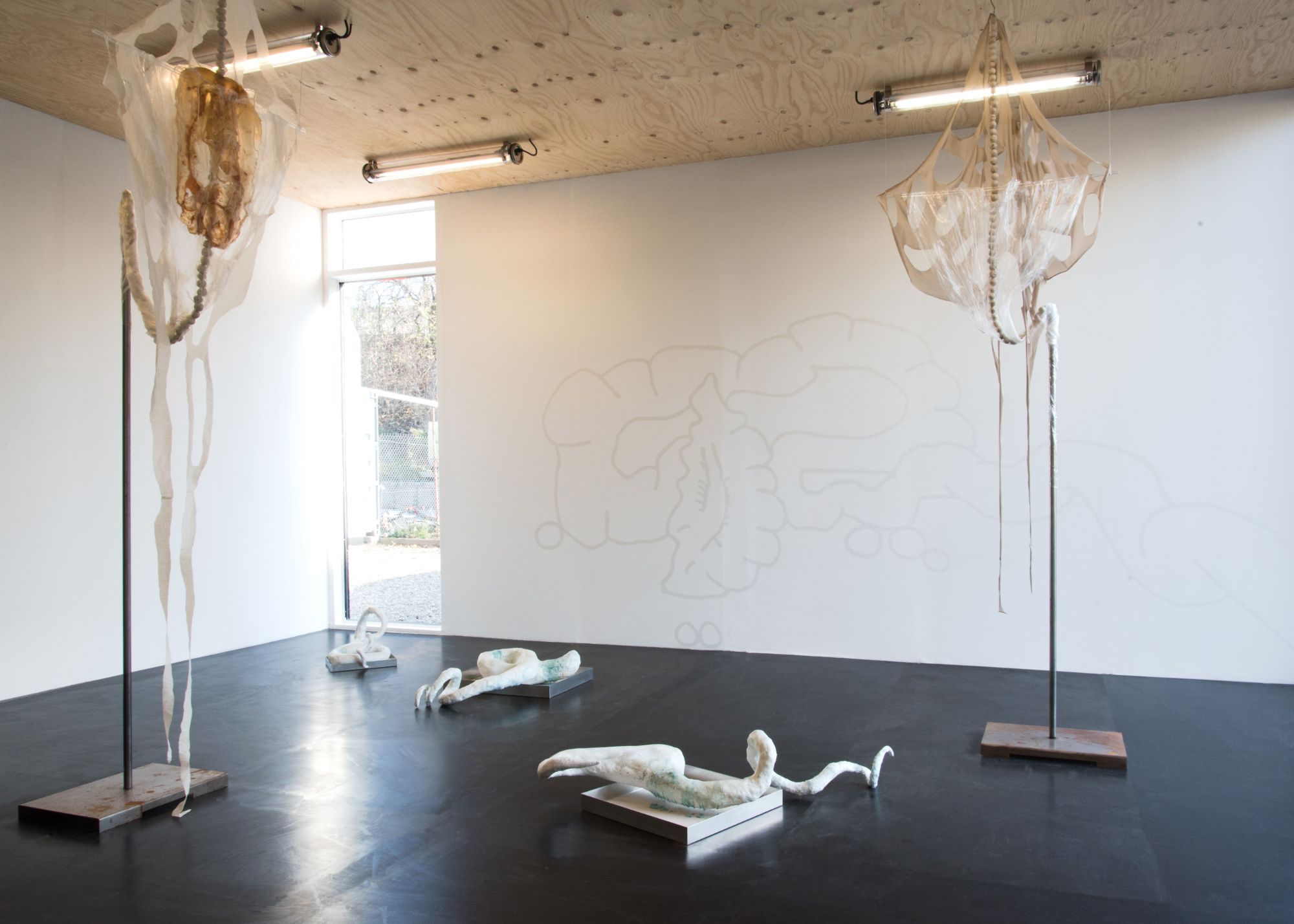
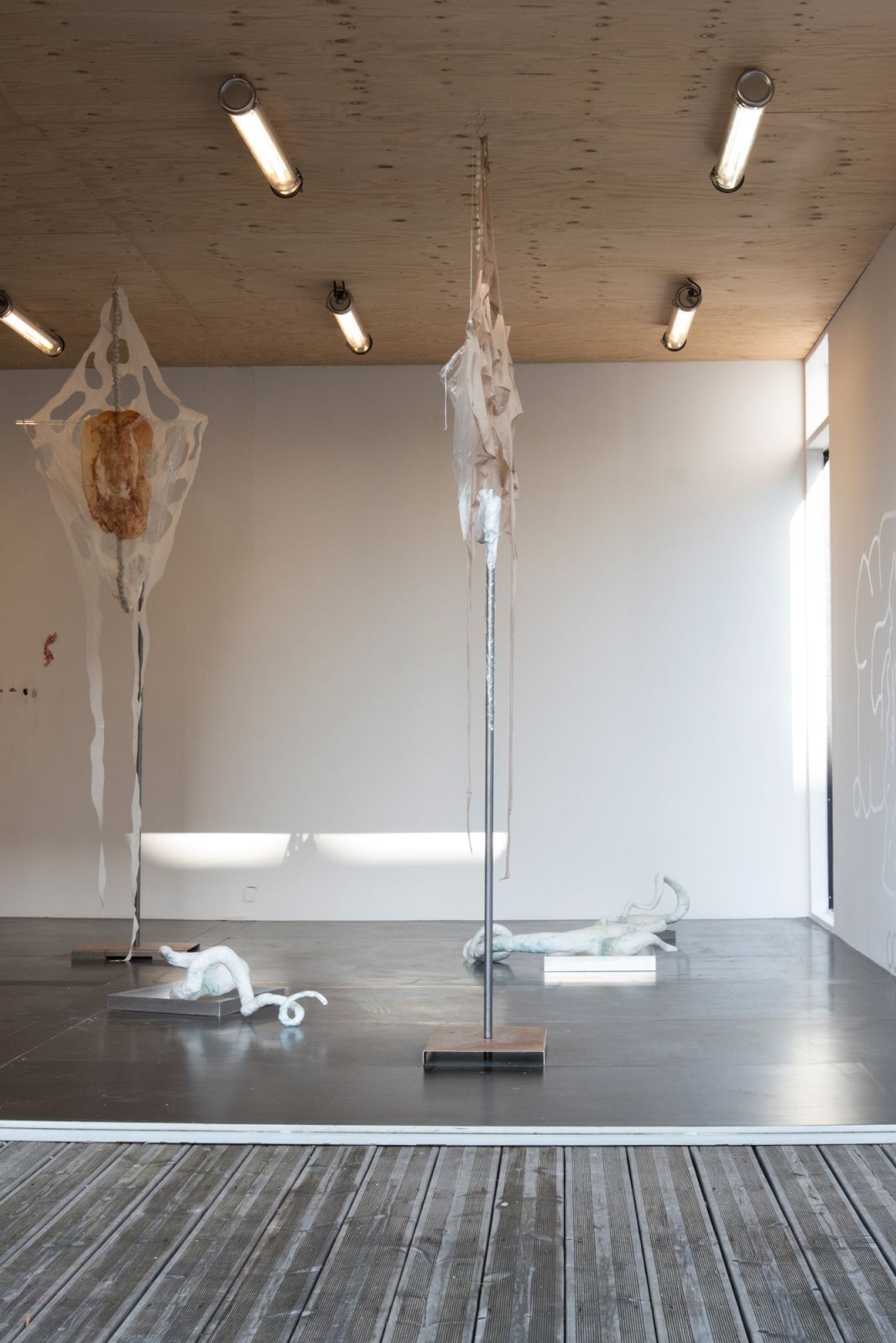
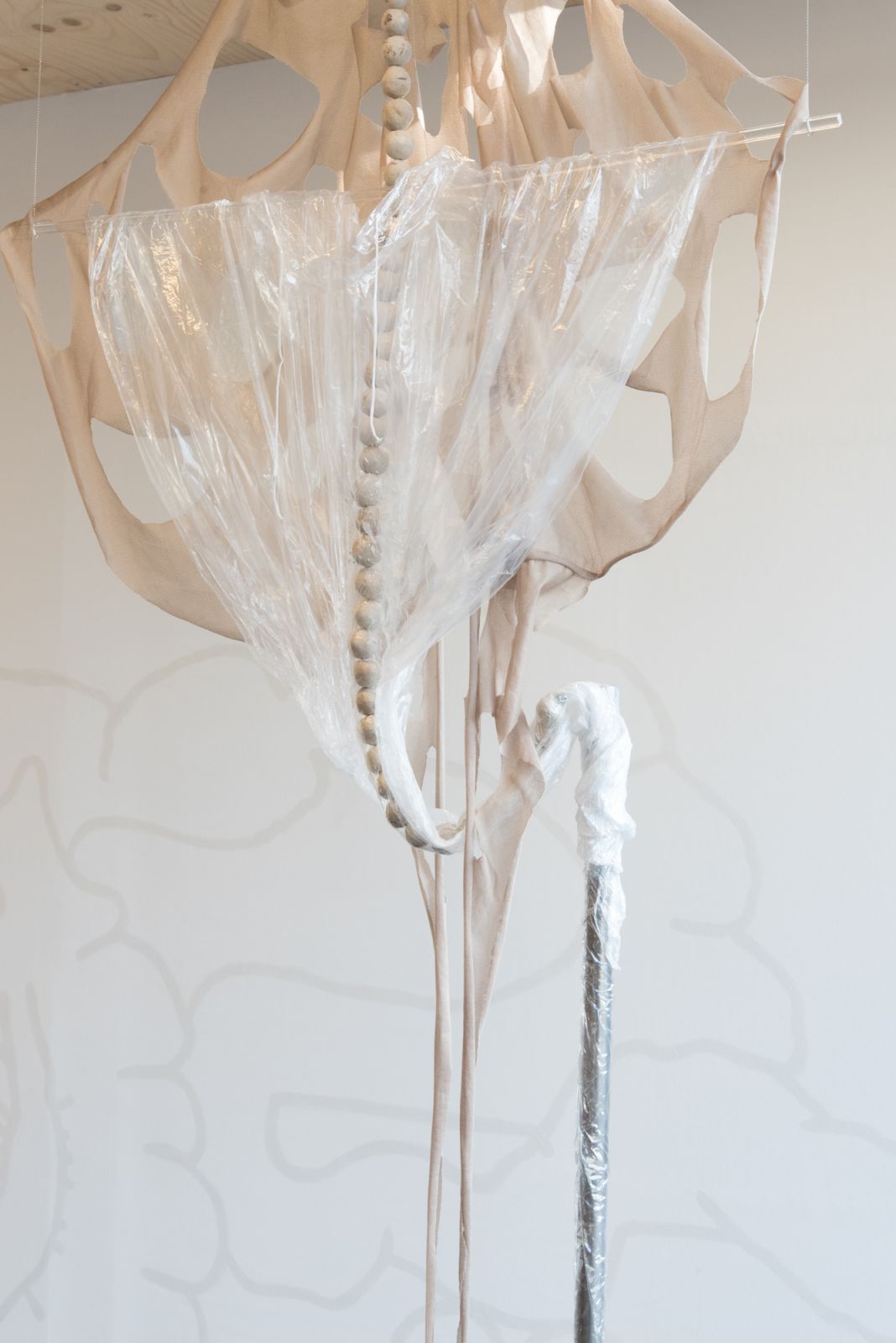
Rising Dissolution, 2019
Sand, melted found plastic, fabric, aluminium, steel, plaster, clay, gel, lacquer, organic matter, water
various dimensions
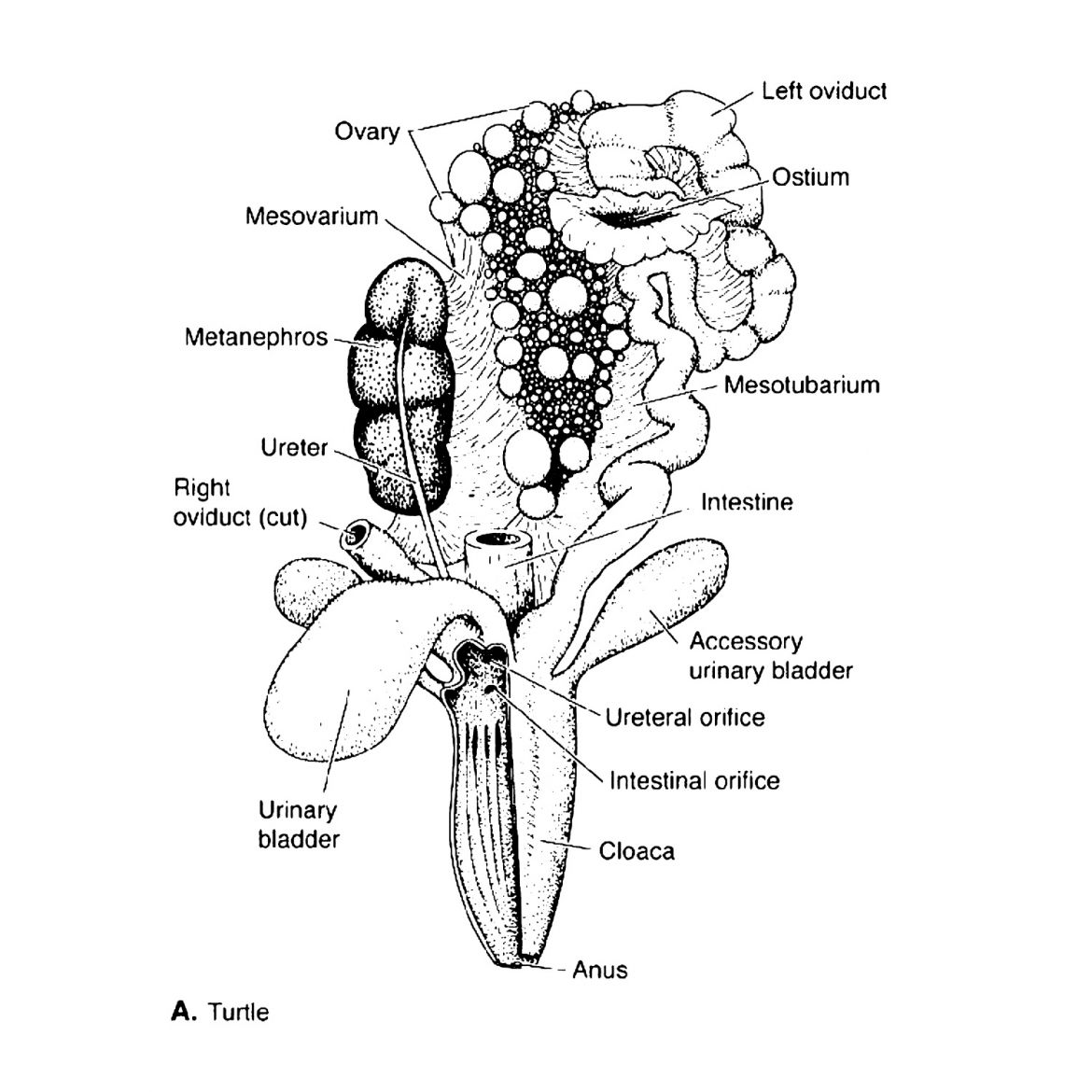
On the left, reference image :
Reproductive system of the female turtle
© Anon, (n.d.)
On the right: studio view, Factatory, Lyon